15 Review Games for Students Where Everyone Has to Think
Skyler Carr
Skyler Carr is the CEO of Mission.io and a former STEM specialist.

TL;DR: The best review games for students make every kid think on every question. Most classroom favorites don’t: in Trashketball, Jeopardy, and Around the World, one student answers while the rest of the room waits. Below are 15 review games sorted by three checks: how many students have to think, what decides who wins, and whether students have to use what they learned or just recall it. Our top pick for the biggest reviews, like the end of a unit or the weeks before state testing, is a Mission from Mission.io (ours, and labeled): a no-prep, whole-class simulation where students apply the content to solve a real problem together, so you see mastery, not just recall. For quick recall practice, Whiteboard Showdown, Quiz-Quiz-Trade, and Quizlet Live keep every student answering. Updated November 2026.
Review day has a hidden math problem. Picture a loud, happy round of Trashketball. One student answers, makes the shot, and the room cheers. Twenty-nine students just watched. Run that for forty minutes and each kid might answer three questions.
Review works because students pull answers out of their own memory. Cognitive scientists call it retrieval practice, and it’s one of the best-supported study strategies there is. But it only works for the student doing the pulling. The kid watching someone else answer gets almost none of it.
So this list asks a different question than most. Every game here is fun. What matters is how many of your students are actually thinking on each turn.
A quick note before you read on: I was a STEM specialist before I started Mission.io, and one item on this list is ours. It’s #1, it’s labeled, and I’ll make the case for why it’s there. You can judge whether I earned it.
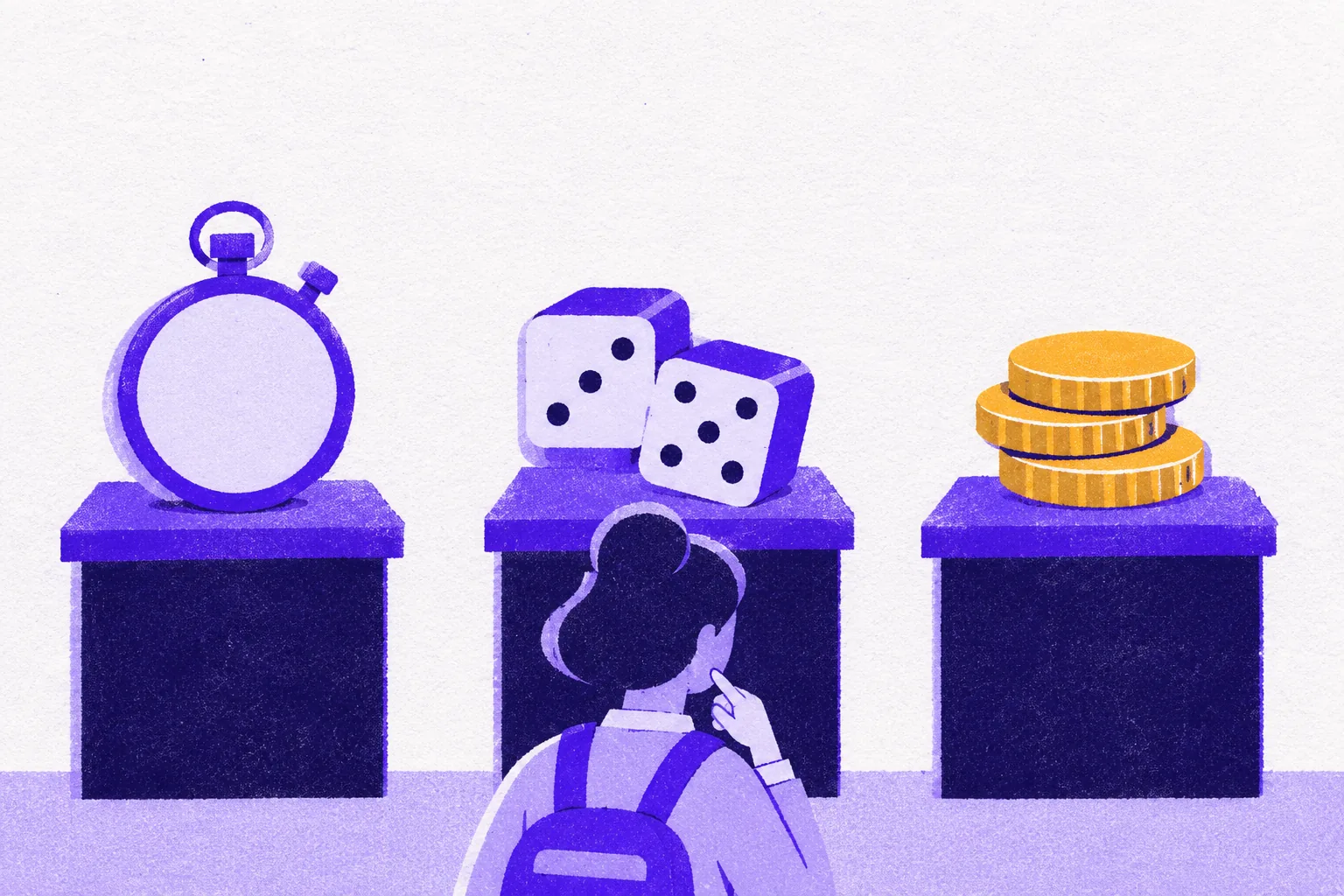
The Bystander Count: three questions for any review game
Before you run a review game, ask three things.
1. On each question, how many students have to think? Everyone, one team, or one kid? The fewer bystanders, the more review actually happens. Mini whiteboards are the cheapest fix in teaching: if every student writes an answer before anyone reveals one, the bystander count drops to zero.
2. What decides who wins? Knowing the material, or something else: speed, aim, luck, or sabotage? We call this the Scoreboard Test, and we use it to compare Kahoot, Blooket, and Gimkit. Five minutes into the game, look at who’s winning and ask why.
3. Recall or use? Can students get through by remembering an answer, or do they have to use what they learned on something they haven’t seen before? This one matters more every year. Many state tests have moved past one-off multiple-choice recall toward sets of questions built around a single scenario or data set, where students have to analyze, reason, and apply. A review that only practices recall leaves the hardest part of the test unrehearsed.
A game that passes all three is real review. Most of the games below pass the first two and practice recall, which is exactly what they’re built for. A game that fails all three is a party, which is fine for the last day before break and expensive any other time.
Review games at a glance
| Game | Tech | Who thinks on each question | What wins | Prep |
|---|---|---|---|---|
| A Mission (Mission.io) | Devices | The whole class, together | Applying it to solve a real problem as a team | Low |
| Whiteboard Showdown | None | Everyone | Knowing it | Low |
| Quiz-Quiz-Trade | None | Everyone, in pairs | Knowing it | Medium (cards) |
| Numbered Heads Together | None | Every team | Knowing it | Low |
| Four Corners, Defend It | None | Everyone | Knowing it, then explaining it | Low |
| Snowball Fight | None | Everyone | Knowing it | Low |
| Find the Mistake | None | Every team | Spotting errors | Medium |
| Trashketball (fixed) | None | Everyone, with whiteboards | Knowing it, plus aim | Low |
| Jeopardy (fixed) | Optional | Everyone, with all-play | Knowing it | Medium |
| Grudge Ball (fixed) | None | Every team | Knowing it, plus some sabotage | Low |
| Around the World (fixed) | None | Everyone, with whiteboards | Speed, unless fixed | Low |
| Quizlet Live | Devices | Every team | Accuracy | Low |
| Gimkit | Devices | Everyone | Right answers, then cash strategy | Low |
| Kahoot | Devices | Everyone | Speed | Low |
| Blooket | Devices | Everyone | Luck, often | Low |
Our top pick for big reviews: apply it, don’t just recall it
1. A Mission (Mission.io)
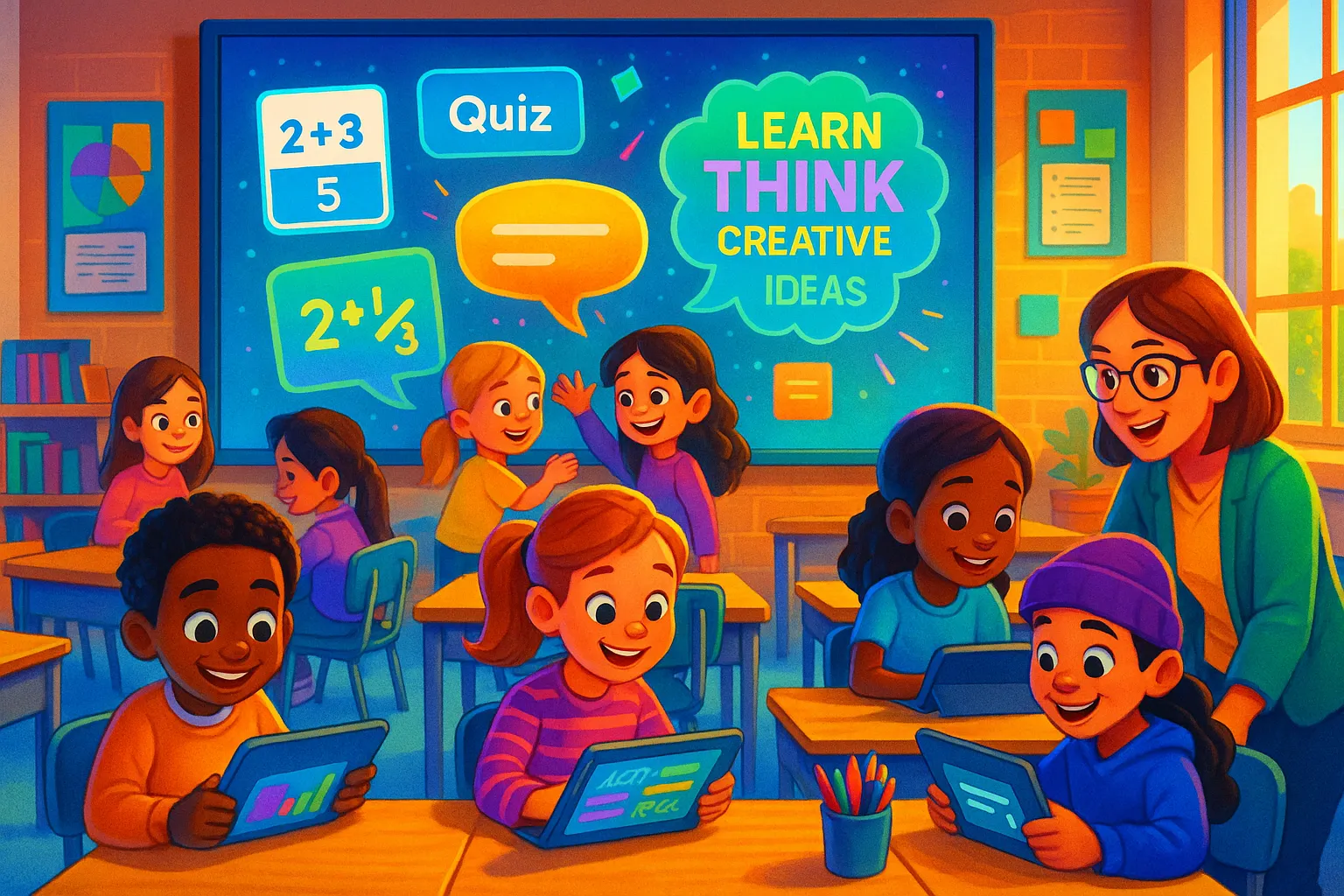
Full disclosure: Mission.io is ours, so weigh this accordingly. Every other game on this list checks whether students can recall an answer. A Mission checks whether they can use it. It’s a teacher-led, whole-class simulation built from the standard you’re teaching: the class becomes a spaceship crew, a lab team, or a city in the middle of an outbreak, and students have to read the data, diagnose what’s going wrong, weigh the evidence, and make the calls together. That’s the kind of thinking the hardest questions on a test are asking for, and it’s what we design every Mission around.
It also scores well on the Bystander Count. There’s no prep: you pick a Mission for the standard and launch it. Every student has a station and a job, so nobody sits out a turn. Students earn points for the choices and teamwork that move the class forward, and the class score is the average of everyone’s, ranked against classes around the world that ran the same Mission. The only way up is together, and you get a clear read on whether the class can actually use the content.
That’s why a lot of the schools we work with lean on Missions hardest in the weeks before state testing. Teachers tell us students who would groan at another review packet show up for a Mission, and by the end the teacher knows who can apply the unit and who can only recite it. Run one per unit you’re reviewing, and use the misses as your reteach list.
We can back this one with our own data. In a 2025-26 study of 1,039 fifth graders across 53 classrooms, conducted by Instructure, students who ran Missions scored significantly higher in content knowledge than students who didn’t (g = 0.335, p < .001), and the more Missions they ran, the higher they scored (+0.0094 proportion correct per session, p < .001). The study meets ESSA’s Moderate Evidence bar (Level II). Free to start.
Missions pair well with the recall games below. Use a quick game to warm up the vocabulary, then run a Mission where students need those same ideas to solve the problem.
Pick a Mission for your grade
| Grade | Try this Mission | Standard | More for your grade |
|---|---|---|---|
| 3rd | Melting Point | 3-ESS2-1, 3-ESS2-2 | 3rd grade science activities |
| 4th | Landslide | 4-ESS2-1 | 4th grade science activities |
| 5th | Matter Matters | 5-PS1-2 | 5th grade science activities |
| 6th-8th | The State of Things | MS-PS1-4 | 6th, 7th, 8th grade science activities |
| 6th-8th, short on time | Storm Front (16 minutes) | MS-ESS2-5 | Same as above |
Teaching K-2? Start with the kindergarten, 1st grade, and 2nd grade science pages.
No-tech review games where everyone answers
2. Whiteboard Showdown
Put students in teams of four, each with a mini whiteboard. Read a question. Everyone writes an answer without peeking, then on “Showdown!” all four boards flip at once. If they match, the team celebrates. If they don’t, the team talks it out until everyone can explain the right answer. It comes from Kagan cooperative learning, and it’s the best all-around review structure I know. Zero bystanders, and you can scan the room for wrong answers in two seconds.
3. Quiz-Quiz-Trade
Give every student a card with a question on the front and the answer on the back. Students pair up, quiz each other, coach if needed, then trade cards and find a new partner. In ten minutes each student answers a dozen questions and teaches a dozen more. Another Kagan structure, and a great one to get kids out of their seats in the last week before a break.
4. Numbered Heads Together
Number the students in each team one through four. Ask a question, and each student writes an answer on their own first. Then heads go together to agree on one answer and make sure every member can explain it. Then you call a number, and that student answers for the team. Nobody knows who’ll be called, so the strong students teach and the quiet ones listen closely.
5. Four Corners, Defend It
Label the corners of the room A through D. Read a multiple-choice question, and students walk to the corner they choose. Here’s the step most versions skip: each corner gets thirty seconds to make its case, and anyone can switch corners after hearing the arguments. The moving gets the energy up. The defending is where the learning happens. It works best on questions that take reasoning, not recall.
6. Snowball Fight
Every student solves a problem on a half sheet of paper, crumples it, and on your signal the room has a ten-second snowball fight. Each student grabs a snowball, checks the work inside, and either signs off on it or fixes it. Then repeat with a new problem. It’s ridiculous, the kids love it, and every student is solving and checking on every round. A natural fit for December.
7. Find the Mistake
Post six or eight worked problems around the room, each with one error hidden in it. Teams rotate with a clipboard, find the mistake, and write the correction. Finding errors in someone else’s work takes more understanding than producing an answer, which makes this one of the best games for test prep in math and science.
Four classic review games worth fixing
These are popular for good reasons, and each has a bystander problem with a quick fix.
8. Trashketball
Teams answer questions, and a right answer earns a shot at the trash can for bonus points. The problem: one student answers while everyone else waits, and the shot can count for more than the answer. The fix: every student writes an answer on a whiteboard, and the team only earns a shot if every board on the team is right. Now the strong students teach the rest of their team before the reveal, and aim is a bonus instead of the main event.
9. Jeopardy
The classic grid of categories and point values. The problem is the format itself: one team picks, one team answers, everyone else waits for their turn. The fix is all-play. Every team writes every answer on a whiteboard, and every team that gets it right scores. It’s the same board and the same fun, with the whole room thinking on every question. Tools like Factile make the board easy, or build one in slides.
10. Grudge Ball
Each team starts with ten X’s on the board. A right answer lets the team erase X’s from other teams, and a made basket erases more. Last team with X’s left wins. Kids love the drama, and that’s the problem. The winner is often whoever the class ganged up on least, which makes it a sabotage game wearing a review costume. The fix: use all-play answers so every team is thinking, and cap how many X’s any team can take from a single opponent per round.
11. Around the World
Two students face off on a flashcard, and whoever answers first moves on to challenge the next student. It’s fast and exciting for the kids who win, and it has the worst bystander count on this list. The students who need practice most sit down first and watch for the rest of the game. The fix: skip the elimination. Everyone answers on a whiteboard, and anyone who’s right moves one seat around the room.
Digital review games
12. Quizlet Live
The most underrated digital review game. Students join in random teams, and each teammate’s screen shows different answer choices, so only one person has the right answer to each question. One wrong answer resets the team to zero. That single rule changes everything: students have to talk, check with each other, and slow down. It’s built for vocabulary and term-matching, and it’s free to run.
13. Gimkit
Right answers earn cash that students reinvest in upgrades, and questions cycle back, so students get real repetition. The trap is that the economy can become the game. Use team mode and keep sessions short. More in games like Gimkit.
14. Kahoot
Everyone answers the same question at once, and you control the pace, which means you can stop and reteach when half the room gets it wrong. The trap is speed: faster right answers earn more points, so quick readers win. Use it at the start of a review to find the shaky spots. More in Kahoot alternatives.
15. Blooket
The one kids ask for by name. Students answer at their own pace, but in modes like Gold Quest the rewards are random, and stealing can decide the winner. Great for energy, weak as a read on what students know. More in games like Blooket.
For a side-by-side of the last three, see our Kahoot vs Blooket vs Gimkit comparison.
Using review games for test prep
Unit tests, semester finals, and spring state testing all reward the same thing: students pulling answers out of memory, again and again, spread out over time. A few habits make any game on this list work harder for test prep. Mix old units in with the new one instead of reviewing only the last chapter. Start every game with a few questions students got wrong last time. And keep a tally of the questions the room misses, because that tally is your reteach list.
For the biggest reviews, add the third check. In the last few weeks before state testing, mix recall games with at least one round where students have to apply the content to a new problem, like a Mission or a Find the Mistake round built from a data table. Recall gets students ready for the easy questions. Applying it gets them ready for the rest.
Count the bystanders
Every game on this list beats a review packet, and your class knows it. Before your next review day, pick a game, picture the room on question five, and count the kids who don’t have to think. Get that number to zero, and for the big reviews, make sure students have to use what they know, not just remember it.
Frequently asked questions
What are the best review games for students?
The best review games make every student think on every question. For the biggest reviews, like the end of a unit or state test prep, Missions from Mission.io are a strong choice: no prep, the whole class takes part, and students apply the content to solve a real problem instead of just recalling answers. For quick recall, Whiteboard Showdown, Quiz-Quiz-Trade, Numbered Heads Together, and Snowball Fight keep every student answering with no tech, and Quizlet Live is the standout digital game because one wrong answer resets the team.
What are good no-tech review games?
Whiteboard Showdown, Quiz-Quiz-Trade, Numbered Heads Together, Four Corners, Snowball Fight, and Find the Mistake need nothing more than mini whiteboards, index cards, or scrap paper. Classics like Trashketball and Jeopardy work too if every student writes an answer on a whiteboard before anyone reveals.
What are good review games for middle school?
Middle schoolers do well with games that add a little competition and a reason to talk: Numbered Heads Together, Four Corners with a defend-your-answer round, Find the Mistake, and Quizlet Live. Grudge Ball is popular but leans on sabotage, so cap how many X’s a team can take.
How do you make Trashketball or Jeopardy better for learning?
Make every student answer. Give each student a whiteboard, have everyone write before anyone reveals, and score every team that gets it right. In Trashketball, only let a team shoot if every board on the team is correct, so students teach each other before the reveal.
What are good review games for test prep?
Mix recall with application. Recall games like Whiteboard Showdown keep facts fresh, but many state tests now ask students to analyze a scenario or data set across several questions. Missions from Mission.io and Find the Mistake are strong for that because students have to use what they know, not just pick an answer. Mix questions from earlier units into every review, and track what the class misses so you know what to reteach.
How long should a review game last?
Fifteen to twenty-five minutes is enough for most games. After that, energy drops and the game starts rewarding stamina more than knowledge. Shorter, more frequent review spread over a unit beats one long review day before the test.
What review activity shows mastery, not just recall?
Look for review where students apply the content to something new: solving a problem, analyzing data, or explaining their reasoning. Find the Mistake and Four Corners with a defend-it round do this on paper. Missions from Mission.io do it at the whole-class level, with students working through a simulation built from the standard, so the teacher sees who can use the content and who can only recite it.