
Share this
by Ryann Garland on February 13, 2026
TL;DR: Classroom attention getters come in four types: verbal call-and-response (“Class, class!” / “Yes, yes!”), rhythmic cues like clap-ins and chimes, nonverbal signals like a raised hand or the teacher stare, and novelty callbacks you rotate in to keep things fresh. Pick one you’ll actually use, teach it in the first week, and practice it until the response is automatic. The full list, sorted by type and by grade level, is below. Updated September 2026.
Getting and keeping students’ attention can feel like a magic trick some days. You know that moment when you need to give instructions, but a low buzz of talking fills the room, and half the class is still mid-story about lunch? That’s where attention getters come in.
Used well, they’re more than gimmicks. They’re tools for classroom management that help you reset the noise level, save precious instructional minutes, and keep your sanity. Let’s be real: sometimes your sanity clock runs out five minutes into second period.
Why Attention Getters Matter for Classroom Management
A strong attention getter isn’t about control for control’s sake; it’s about creating a learning environment where students can focus. When you establish clear signals early, students respond faster, transitions are smoother, and your lesson stays on track.
Some teachers think of them as “reset buttons” for the classroom. Whether you need quiet for directions or to shift from group work to independent study, the right signal can do in seconds what might otherwise take minutes.
The Four Types of Attention Getters
Most attention getters fall into one of four types. Knowing which is which helps you build a small menu instead of leaning on one cue until the class tunes it out.
1. Verbal call-and-response
You say the first half of a phrase and students finish it. “Class, class!” / “Yes, yes!” is the classic. Verbal cues work because they demand a response, so every student has to stop and participate. They are the best fit for elementary classrooms and for any room where energy is high.
2. Rhythmic and sound cues
A clapped rhythm students echo, a chime, a wind chime, a few notes on a xylophone, or a doorbell. Sound cues cut through noise without you raising your voice, and they work at every grade level because there is nothing sing-songy about a chime.
3. Nonverbal and visual cues
A raised hand that students mirror, flicking the lights, a countdown on your fingers, standing still in the middle of the room, or the teacher stare. Nonverbal cues are the quietest option and the one older students respect most, because nobody has to say “guacamole” in front of their friends.
4. Novelty and themed callbacks
Pop culture lines, school mascot chants, jazz riffs, and seasonal swaps. These are the ones you rotate in to keep a routine from going stale. They are not a replacement for your everyday cue; they are the seasoning on top of it.
Call and Response: The Teacher’s Secret Weapon
One of the most effective (and fun) ways to grab students’ attention is through call and response. You say a first phrase, and your students repeat or complete it.
- “Red robin” → “Yummm!”
- “Macaroni and cheese” → “Everybody freeze”
- “Ready to rock” → “Ready to roll”
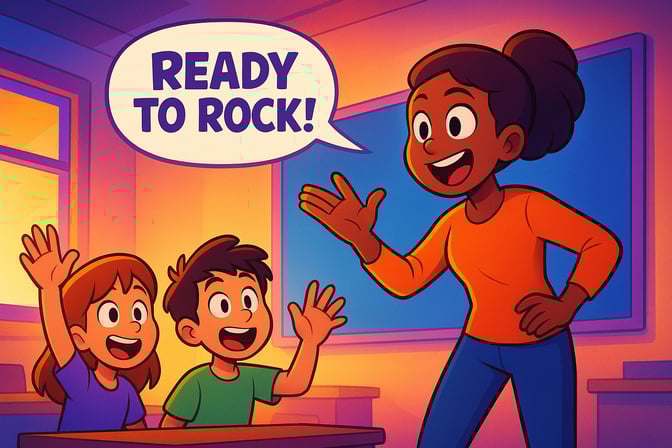
The key is to say it like you mean it. Half-hearted macaroni gets you no cheese. The rhythm and interaction make this style a fantastic tool for student attention because it engages everybody at once.
Favorite Attention Getter: The One You’ll Actually Use
Every teacher has a favorite attention getter, whether it’s silly (“Holy moly” / “Guacamole!”) or regal (“Hail the queen” / “Long live the queen!”). The real secret? Consistency.
If you love it, you’ll use it. And if you use it consistently, students will follow. It’s like a bad first date. If it doesn’t click, don’t force it. The worst attention getter is one that feels awkward to you, because you’ll abandon it before it works.
Clap In for Instant Focus
The clap in is a tried-and-true method that works in just about any classroom. Clap a rhythm, and your students respond by copying it. This is especially helpful when the noise level is high.
Once the class knows the drill, hand the power over to a student leader for a day. It’s a great way to build engagement and ownership while reinforcing the routine.
Using Music Teachers’ Tricks in Any Classroom
Music teachers have mastered the art of getting students’ attention without raising their voices. A quick tap on a musical instrument, a few notes of a familiar tune, or a short chime can bring the room to order instantly. Who knew a xylophone could command more respect than your teacher voice?
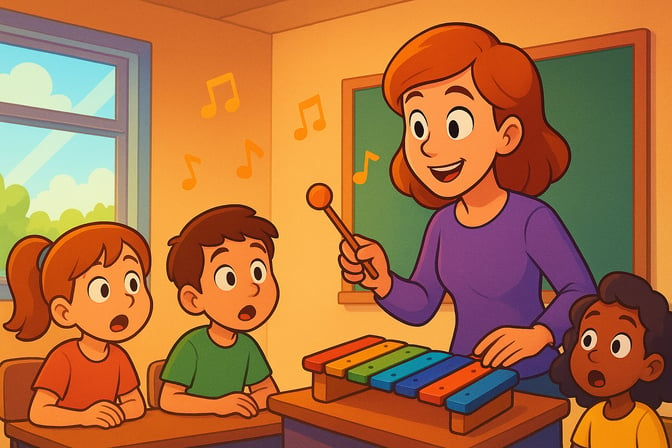
Nonverbal cues like this are particularly effective with older students who might not be fans of sing-songy callouts but will notice something unexpected.
Whole Brain Teaching and Brain Teaching Signals
Whole brain teaching and brain teaching strategies build movement and call backs into the day. The classic example is:
Teacher: “Class, class!”
Students: “Yes, yes!” (matching the tone and pace)
This simple exchange gets everybody to listen while keeping the mood upbeat.
Creative Call Backs You Haven’t Tried Yet
Sometimes the best attention getters are the unexpected ones:
- “Shark bait” / “Oo ha ha!” (Finding Nemo)
- “Hot fudge” / “Sundae!”
- “Zip a dee ay” / “My, oh my, what a wonderful day!”\
- “Matthew McConaughey” / “Alright, alright, alright”
Pop culture references are a fun way to connect with students and keep their focus on you when you need it most.
Teaching Students to Practice Responding
A signal only works if your students know what to do when they hear it. Early in the school year, take time to practice responding.
Turn it into a quick game: time how fast the hush fell after you give the cue. If the class beats their best time, they earn a point toward a class reward.
And practice again in week three or four, once the first-week shine has worn off. That is usually when the response gets sloppy, and a two-minute reset beats a month of repeating yourself.
Eye Contact and Nonverbal Cues
Sometimes the quietest signals are the most powerful. Standing silently in the middle of the room, making eye contact, or raising your hand can bring student attention back without saying a word.
Over time, these become second nature for students, making them a subtle but effective classroom management tool. Mastering the teacher stare is an art form. You’re aiming for “I see you,” not “I will end you.”
Themed Attention Getters with a School Mascot
Link your attention getter to your school mascot for instant school spirit. For example: Teacher: “Go…” / Students: “…Tigers!”
It’s familiar, it’s community-building, and it works. It’s effective, especially if you throw in jazz hands for emphasis.
Novelty Attention Getters to Keep Things Fresh
Even the best routines need variety. Rotate in a surprise cue now and then:
- “Ba da” / “Da ba” (jazz riff style)
- “Peanut butter!” / “Jelly time”
- “Flat tire” (everyone makes a “whomp whomp” sound)
Unexpected cues catch students’ attention fast and keep them engaged.
Attention Getters for Older Students
Yes, even teens will join in if it’s done right. Keep it relevant: sports chants, trending memes, or physical cues like “Stand if you’re ready!” work well. Teens like to act too cool for attention getters, but when you hit them with whatever line is all over their feeds this month, they can’t help but pay attention. Who knew their teacher was in on that side of TikTok?
For some classes, even a bold “ready to rock / ready to roll” still works, especially if you commit to it.
Using Everybody Freeze and Everybody Focus
“Everybody freeze” is perfect for getting stillness during safety instructions or high-stakes moments. “Everybody focus” works when you need mental redirection before a challenging part of the lesson.
Use them sparingly so they keep their impact.
Layering Attention Getters into Routines
Don’t rely on a single cue. Have a small menu of attention getters: one for transitions, one for noisy times, and one for serious moments.
Rotating keeps students from tuning out and ensures you can adapt to the situation.
The Role of Attention Getters in Student-Centered Learning
In student-centered learning, students often work in groups or move around the classroom. Attention signals give you a quick way to regroup without breaking the flow. (If you’re building more group work into your week, a reliable signal is what makes it survivable.)
They’re not about control; they’re about keeping the focus where it belongs while respecting the student-centered approach.
How Mission.io Can Help
At Mission.io, we know classroom management is essential for any lesson to succeed. That’s why our Missions integrate natural breaks and cues into student-centered learning activities.
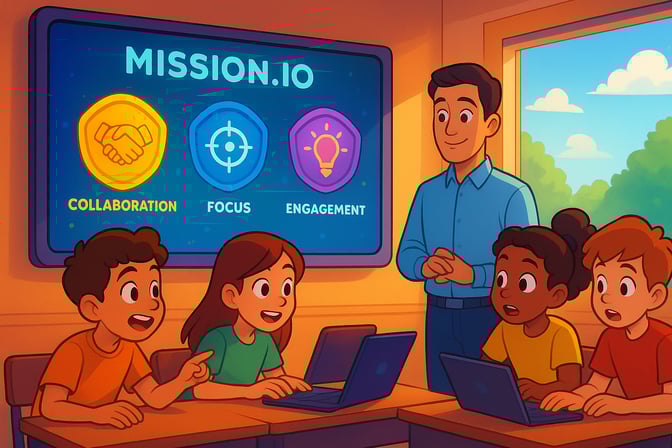
We help you create engaging, structured experiences that encourage students to lead, respond, and collaborate, all while keeping the day running smoothly.
Tips for Creating Your Own Attention Getters
- Tie them to students’ interests
- Make them rhythmic or melodic
- Keep them short and clear
- Practice responding regularly
- Swap in new ones each semester to keep them fresh
When you create your own attention getters, you’re modeling creativity and flexibility for your students.
Final Thought: A Fantastic Tool, Not a Crutch
Attention getters can transform transitions from chaotic to calm in seconds. But like any classroom management tool, they work best when used intentionally.
Aim for balance. You need to use them enough to keep the flow, but not so often that they become background noise. Find the one that fits your style, teach it clearly, and watch your students respond.
Frequently Asked Questions
What are the four types of attention getters?
Verbal call-and-response (“Class, class!” / “Yes, yes!”), rhythmic and sound cues (clap-ins, chimes, a xylophone), nonverbal and visual cues (a raised hand, lights off, the teacher stare), and novelty or themed callbacks (mascot chants, pop culture lines) that you rotate in to keep a routine fresh. Most teachers keep one of each on hand.
What are good attention getters for elementary students?
Call-and-response works best in elementary classrooms because it asks for a response, so every student has to stop and join in. Try “Macaroni and cheese” / “Everybody freeze,” “Hocus pocus” / “Everybody focus,” “Holy moly” / “Guacamole,” or a clapped rhythm students echo. Pick one, teach it the first week, and practice it like a game.
What attention getters work for high school students?
Older students respond best to cues that don’t feel childish: a chime or doorbell, a raised hand they mirror, a countdown, a sports chant tied to the school, or a line borrowed from whatever is trending. Nonverbal cues are usually the safest bet because nobody has to perform in front of their friends.
How do you teach students to respond to an attention getter?
Introduce it on day one, explain exactly what the response looks like (voices off, eyes on you, hands empty), and practice it several times as a game. Time how fast the room goes quiet and let the class try to beat its record. Re-practice in week three or four, when the first-week shine wears off and responses get sloppy.