
Share this
by Ryann Garland on December 4, 2025
Creating engaging activities isn't about entertainment. It's about tapping into the natural curiosity of students and turning everyday lessons into active learning opportunities. Yes, curiosity killed the cat … but lucky for us, curiosity fuels learning in humans.
When students are engaged, they ask better questions, stay focused longer, and develop a deeper understanding of the content. Fun becomes the vehicle for learning.
Why Student Engagement Matters
Student engagement is the cornerstone of effective teaching. Without it, even the best lesson plans fall flat (like last week’s cafeteria pancakes). When students engage, they participate, reflect, create, and take ownership of their learning.
In short, engaged students learn more.
Active Learning Changes the Game
Traditional lectures can only take students so far. How many times did your mind wander to your weekend plans while you were in an undergrad lecture? Exactly. Active learning, by contrast, encourages students to do more than listen.
They discuss. They question. They solve. They move. They make connections. Active learning activities push students to interact with both the content and each other.
The Science Behind It
Studies show that active learning improves student engagement and retention. When learners are physically or mentally involved in a task, their brains make stronger connections. That leads to better recall and greater mastery over time. Essentially, it’s less of students saying, “I swear I learned this last week,” and more “Yes! I got it!” Every teacher’s dream.
How to Engage Students in Any Classroom
Whether you teach science, English, or computer science, the core idea is the same: involve students in the process of learning.
Here are strategies that encourage students to think, collaborate, and explore new ideas (that will even get the most group-project-phobic students excited to participate).
Our Top Active Learning Activities
Use Open-Ended Questions
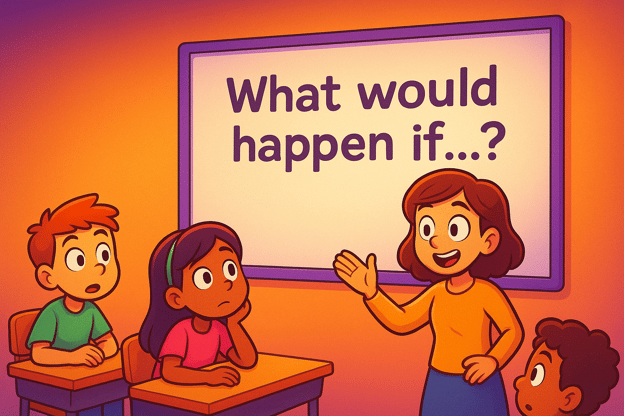
Asking questions with no single right answer is a proven way to encourage participation. These questions create space for different perspectives and self-expression.
Try:
- "What would happen if … ?"
- "How would you solve this problem in a different way?"
- "What do you think will happen next, and why?"
Build in Movement
Learning doesn’t have to mean sitting still. Integrate gallery walks, station rotations, or classroom scavenger hunts to keep students moving and engaged.
Even simple shifts, like moving from whole-class discussion to small groups, can reinvigorate a class.
Incorporate Interactive Classroom Activities
Sticky notes. Whiteboards. Breakout rooms. Anything to get students writing, rearranging, and visualizing their ideas is a win. When students can take a thought from their brain onto paper, that’s a real sign of learning. Interactive classroom activities transform students from passive listeners to active participants.
Try using a virtual whiteboard to gather class ideas or launch a digital quiz to review material in a fun way.
Create Real-World Connections
Help students see the relevance of the content. Tie lessons to current events, personal experiences, or real-life applications. For example, students can practice writing a news broadcast on a local community event. Perhaps they can use their writing and research skills to write a proposal solving an issue in the school. If students can have a say in a project that they care about, they are more likely to engage and put forth their best effort.
This doesn’t mean every class becomes a TED Talk. Just link a concept to something students care about.
Leverage Small Groups for Big Impact
Collaborative learning in small groups promotes problem solving, idea sharing, and most importantly, critical thinking. Students learn from each other as much as they do from us.
When students discuss and debate concepts with other students, they’re reinforcing their own learning in powerful ways.
Encourage Participation Without Pressure
Not every student is ready to jump into a big class discussion. Use low-stakes strategies like Think-Pair-Share or journaling to allow quieter students time to reflect and prepare.
This also promotes self-awareness and deeper thinking. Or as I call it: getting them to think without eye rolls first.
Provide Students with Creative Challenges
Allowing students to build or solve open-ended problems taps into their creative thinking. Whether they’re prototyping a product, designing a social campaign, or coding a game, creation leads to connection.
These challenges help learners retain knowledge by applying it.
Make the Learning Process Visible
Use exit tickets or concept maps to make learning visible. These tools help you assess understanding and help students reflect on their progress.
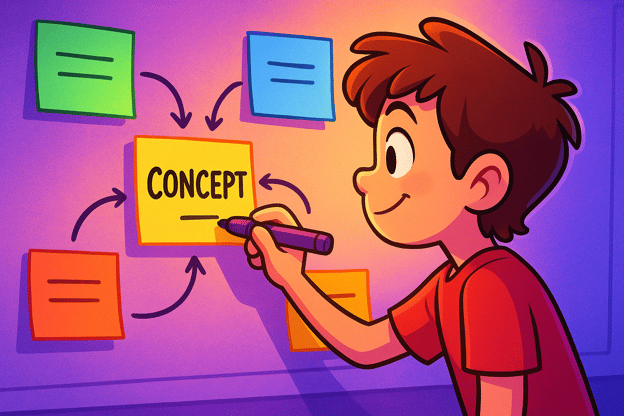
Reflection is one of the most underrated active learning strategies.
Break It Down: Quick Engagement Ideas
- Use emoji check-ins or other social-emotional learning activities
- Ask students to draw the concept
- Do a "one-word" wrap-up
- Let students form groups based on random prompts
- Use breakout rooms for small group analysis
Active Learning Strategies That Stick
- Jigsaw method
- Think-Pair-Share
- Fishbowl discussions
- Role-play and simulations (such as a Mission experience)
- Digital polls or instant surveys
- Student-led lessons
Prepare Students to Think Deeply
Learning is more than memorizing content. Active learning helps prepare students for a world where critical thinking and collaboration are key.
Give them strategies that stretch beyond the classroom.
Improve Student Engagement with Technology
Use tech tools intentionally. Games, digital whiteboards, collaborative docs, and multimedia presentations can enhance student engagement and make room for interactive exploration.
Mission.io, for example, offers digital Mission experiences, all based on classroom standards. Whether using their knowledge of natural disasters to save a planet or counting their way through math problems to find a lost crew member, Mission.io lets students explore content in a collaborative, interactive way.
Design Learning Activities for a Deeper Level
Well-designed learning activities should challenge students to analyze and synthesize information. This goes well beyond basic recall.
Don’t be afraid to make students a little uncomfortable. Struggle often leads to growth. Think brain stretches, not panic attack levels of discomfort.
Encourage Students to Ask Questions
A questioning mindset promotes deeper understanding. Instead of always providing answers, encourage students to ask better questions.
Have them write questions on sticky notes or post them digitally for class discussion.
Active Learning in Computer Science
In computer science, use debugging challenges, peer programming, and real-world applications like app development to keep students engaged.
These activities mirror real tech-world scenarios while improving problem-solving and coding skills.
Build a Stronger Learning Environment
A great learning environment values student voice and encourages experimentation. This type of environment also helps students feel comfortable with making mistakes. Engagement doesn’t happen in fear-based classrooms. The idea of “if you fail, you’re doomed forever” is out, and “it’s okay to try again” is in.
Build community before you ask students to take creative risks.
Start with Creativity
Use pre-assessments, brainstorms, or KWL charts to activate what students already know. Building on prior knowledge is key to connecting new concepts.
Just because the curriculum is set doesn’t mean your activities have to be. Adapt required course material into more engaging formats: debates, podcasts, design challenges, or even mock trials.
Collaborative Learning & Knowledge Retention
Group discussions and whole-class brainstorming are great ways to encourage collaborative learning and engagement.
Make sure roles are clear and expectations are consistent so all students participate.
Don’t stop at theory. Let students apply what they’ve learned through projects, presentations, or real-world tasks. The application of a principle helps reinforce concepts and supports long-term memory.
Always Reflect.
Ask students: What did you learn? What surprised you? What do you still wonder?
These reflection questions promote metacognition and help students internalize the learning process. And don’t worry, reflection doesn’t mean meditating in a downward dog position. Unless you want to. Then by all means…go ahead.
Where Mission.io Comes In
At Mission.io, we believe in the power of engaging students through active learning. That’s why every digital Mission we create is built to challenge and support learners through hands-on, standards-aligned exploration that they love.
From interactive research tasks to real-world simulations, our platform enables students to work collaboratively while building skills that stick.
Each Mission is designed with classroom realities in mind: limited time, mixed abilities, and a constant demand for meaningful learning. When students feel like they have a say in the learning process, then they engage. When they engage, learning soars.
Take your students to the next level. Boost up their engagement. Check out Mission.io today.