
Share this
by Grace Balena on February 26, 2026
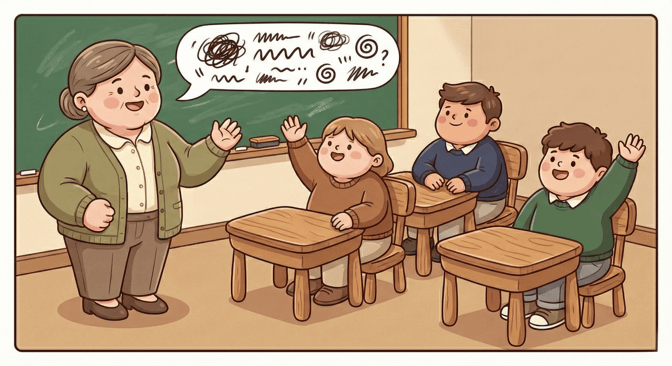
Some days, it feels so good to teach. All the students are seated as you turn your back to write on the board, and you feel warm and fuzzy all over. This is going to be a good day. You bask in the sweet sound of silent students, undoubtedly paying rapt attention to the carefully organized lesson you planned the day before.
And then reality hits. You remember that if it seems too good to be true, it probably is. You turn around to blank stares and question-mark faces. But don’t worry, you know what to do. With a sigh and a smile, you remember to check that your students are understanding the lesson.
Introduction to Checking for Understanding
Alright, but what does it really mean to check for understanding? Checking for understanding is equally as important as the lesson itself. To teach well, you need to make sure students are learning, not just being taught.
We’re here to talk about structured, evidence-based strategies to ensure your students grasp even the most difficult and new concepts you teach.
By getting a read on your students throughout lessons, you can help students to close learning gaps in real time, build their metacognition, and improve long-term learning outcomes.
Core Principles of Checking for Understanding
Continuous Cycle
Teachers who cycle through a check for understanding moment-to-moment (in a lesson), medium-term (unit-level), and long-term (benchmark) succeed in helping students comprehend and remember lessons, not just during the school day but throughout the school year.
Alignment
Make sure to align your strategies to lesson goals and assessment criteria. Before you plan a fun activity, ensure it measures the skill you’re teaching.
Responsiveness
When you check for understanding, the evidence you gather can only help if you take action. We’ll talk more later about knowing whether to reteach, regroup, or accelerate your lesson.
Equity and Inclusion
Look out for students who may need special accommodations. Adapt strategies for multi-lingual learners, students with disabilities, and varied learning preferences.
Student Agency
To lessen some of the pressure on you, remember that students want to clue you in. Integrate self-checks for your students to assess how well they comprehend, and allow them to take charge of their own learning.
Strategies for Checking Understanding
Here, we cover five different approaches, each with multiple specific ways to check for understanding.
Verbal & Questioning Approaches
Verbal checks are a traditional, tried-and-true method for gauging student understanding.
- Open-ended questions: Questions allow students to re-explain what they’ve learned, which can help you as the teacher understand what stood out to them and what may have flown over their heads.
- Hinge questions: These are another useful way to check for understanding. These questions are often set up in a multiple-choice format, with all the wrong answers representing a common misconception. This way, all students get a chance to respond, you can easily identify common misconceptions, and it allows for natural correction as students reflect while you explain why each choice is wrong.
- Think-pair-share: Asking students to individually reflect, pair and share with a partner, and then discuss as a class. Activities like these reach every student and can lead to some valuable peer explanations. This can be frustrating to watch your students learn better from someone who isn’t even old enough to drive!
Avoid asking questions that encourage agreement without reflection. Here are some examples of what not to ask:
- “Does everyone understand?”
- “Are we ready to move on?”
Non-Verbal & Visual Approaches
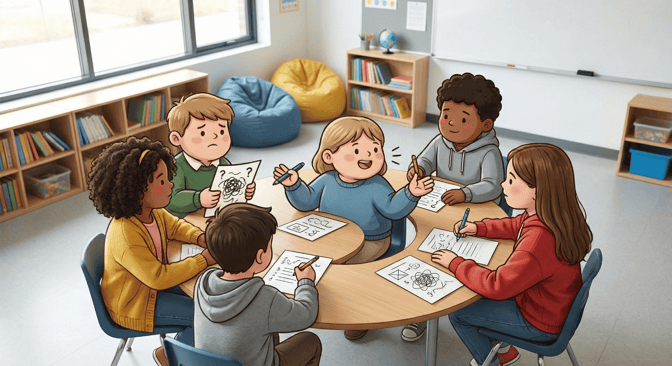
Sometimes, your kids are unusually quiet, and you don’t want to disturb the peace. Here are some quiet activities you can implement to make sure everyone is following along (without rousing the circus).
- Thumbs Up: The classic thumbs up, thumbs down, thumbs somewhere-in-between. Or, ask students to hold up their fingers on a one-to-five scale for gauging their confidence. These hand signals act as a quick check of the room’s temperature.
- Whiteboards: You could also invite students to come up and write the main concepts or steps on the whiteboard. If your students have individual whiteboards, ask everyone to silently write down what they think the answer is (this also presents an opportunity to use hinge questions). And no peeking before you raise your board!
- Visual Cues: Some teachers opt for traffic light cards. If you see a lot of green, feel free to speed ahead. But be sensitive to the reds and yellows!
- Maps and Diagrams: Ask students to make a concept map and fill it with as much as they can remember from the lesson. Alternatively, you could provide students with concept maps or diagrams that are missing important words or phrases and allow them to fill in the gaps. Visual representation is key for memory retention.
- Sticky Notes: Give every student a sticky note to write down something they learned, then have everyone post their notes to the board and let them admire what they now know (while you quietly assess whether or not they need a do-over).
Interactive & Kinesthetic Approaches
Maybe they haven’t been outside for recess, maybe it’s the final hour before release… If your class is feeling a little antsy, try getting them actively thinking or even moving with some more hands-on understanding checkpoints.
- Four Corners: Play four corners. Ask students to stand in a corner of the room corresponding to an answer to a multiple-choice question. Bonus: students usually will try to convince others that their corner is right. Let them teach each other!
- Bingo: Pass out bingo cards with major concepts and keywords from the lesson. Try summarizing the lesson or telling a funny story using the vocabulary words, and watch students focus to remember all the new information.
- Quick Write: Set a 2-minute timer or play a quick song, and ask students to write as much as they can remember from the lesson before the time is up.
- Gallery Walk: Post quick activities in a gallery walk. Ask students to solve quick equations, answer a multiple choice question, or reorder terms, and then let them walk around the room at their own pace to solve all the questions. To take it a step further, organize the questions in an escape-room style, forcing students to fully understand that station before moving on.
- Role-Play: Ask students to role-play a teacher in small groups or pairs. This lets you walk around the room to check the pulse of your students, and also gives students a chance to talk through the lesson and misconceptions they may have with their peers.

Technology-Enhanced Approaches
If you’ve been given technology and tools but are unsure how to keep students on task while engaging with technology, here are some optimized approaches for checking understanding.
- Digital exit tickets: Exit tickets using platforms like Google Forms or Poll Everywhere are a quick and easy way to view all of their responses at once (without having to decipher handwriting!).
- Quizzes: Real-time quizzes on platforms like Kahoot! or Mentimeter can engage your students in a fun, quick review of what you’ve covered.
- Collaborative Apps: Share a collaborative whiteboard or document with the class to either create a mind map together or to give asynchronous feedback on things they’d like you to explain in a new way. When everyone contributes and can see the contributions of others, it can help make students feel less embarrassed about falling for a common misconception.
- Movie Stars: Ask students to form groups and create a short video (using a platform like Flipgrid) to explain their thinking. This gives them a fun chance to put a creative spin on the lesson. Maybe frame the assignment as an advertisement from a mad scientist or a grammar review to help write a presidential address.
Creative Expression Approaches
Sometimes it feels too time-consuming to give a whole art lesson. We’ve got you covered with some quick art exercises that build off of the other curriculum you’re teaching, satisfying both students and standardized tests.
- Music: Have students write a song or a poem using a given (or class-created) list of keywords from the day’s lesson. Maybe give treats or extra credit to students brave enough to sing or perform for the class!
- Drawing: Ask students to draw a diagram or comic presenting one takeaway. You could even create a walkthrough art gallery, or paste all their creations onto that empty bulletin board you’ve been meaning to decorate.
- Digital Art: If you want to use technology, having students sketch a brief idea on Google Canvas or AutoDraw can provide a mess-free art experience to prove their understanding.
From Evidence to Action
There are endless possibilities for checking for understanding. But these activities work best when you take action after seeing how well students are understanding. We’ve provided a simple decision path framework for moving forward after checking for understanding.
Decision Framework: What Next?
If only a few students understand, reteach the class using a different method or change the problems and examples you work through.
If some students understand, scaffold with small groups or peer tutoring. Students who understand can often explain lessons to their peers, and you can always go group-to-group to prevent further misunderstandings.
If most students understand, you can individually address the ones who need help and then move on.
If everyone understands, full steam ahead!
Being able to pivot your instruction is a sign of responsive instruction, and students will appreciate your attention to their specific needs.
Overcoming Obstacles
While many of our approaches work well or can be adjusted to different classrooms, there are still going to be obstacles you come across.
If you have a particularly large class or are combined with another class for a lesson, using quick polls and digital checks can eradicate much of the headache of trying to get everyone onto a new task.
If you’re strapped for time, integrate micro-checks throughout your instruction instead of waiting until the end to deal with misconceptions. Instruction should include pauses for processing and reflection.
If it’s difficult to make the lesson equitable for all students, design strategies that don’t rely on volunteers or public exposure. If students feel safer, they’ll understand more.
With intentional planning, varied modalities, teacher training, and just plain experience, you’ll be better prepared to meet the needs of your students.
Implementation Framework
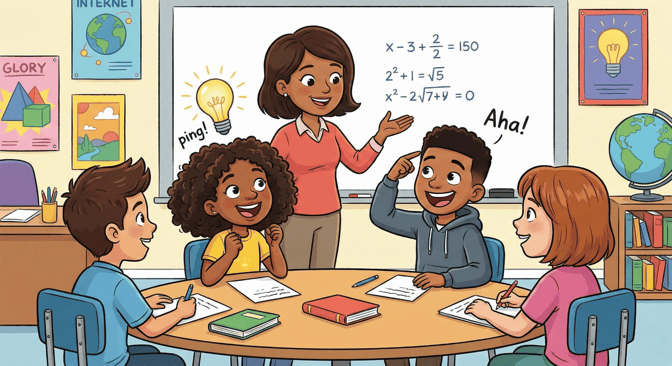
A simple flow for teachers to remember:
Plan → Check → Interpret → Act → Reflect
- Plan aligned checks.
- Check with varied methods.
- Interpret evidence.
- Act (reteach, scaffold, accelerate).
- Reflect on what worked for next time.
The Future of Checking for Understanding
As education evolves, so will the ways we check for understanding. No longer will students suffer from pop quizzes or the feeling of being singled out for their misconceptions. We hope to create a culture of continuous growth in the classroom.
We are also moving towards a future where students can take control of their education. Through self-assessment, peer feedback, and maybe even technological assistance, students can track their progress and proactively seek help.
Lifelong Mission to Learn
Checking for understanding shouldn’t be just another box to check on your lesson plan. When you consistently check for understanding and attune yourself to the needs of your students, not only will their understanding deepen, but so will their trust in you.
So next time you make a lesson plan, include at least one check for understanding. Start with something as simple as an open-ended question or a pack of sticky notes. When students feel like you care about their learning, you teach them to become lifelong learners.
Ready to transform your lessons? Explore more resources and strategies to enhance student learning at Mission.io.