
Share this
by Ryann Garland on January 14, 2026
Why Project-Based Learning Works
Project-based learning (PBL) is a hands-on, student-centered approach where students tackle real-world problems. Not only does it get students more excited, but it also promotes better critical thinking, stronger communication skills, more collaboration, deeper learning, and increased engagement.
Combined with Mission.io, PBL helps teachers swap traditional instruction for unforgettable, real-world learning adventures.
What Is Project-Based Learning?
Project-based learning is more than arts and crafts; it is embedding real-world problems, challenges, and complex problems into student work. Projects contain a guiding question that gives students the chance to take the lead in their own learning and practice deep problem-solving skills. And that’s just the key: project-based learning is more than traditional instruction because it gives students the power. PBL helps students see how what they’re learning will help them beyond passing next week’s test.
When students can use their voice, they have greater choice and ownership over their learning. Project learning activities are any activities that give students a chance to solve a problem, create a solution, and be creative.
If you’re ever lost on crafting a PBL assignment, just remember the 4 C’s: critical thinking, communication, collaboration, and creativity. With those four keys as a guidepost, you’re sure to find projects for the classroom that aren’t only fun but also meaningful for students.
Top 15 Project-Based Learning Ideas for Maximum Engagement
To get you started, we’ve compiled fifteen of our favorite ideas to take your classroom from textbook-heavy to project-based.
Idea 1: Community Garden Design
For younger students, designing a garden is a great way to promote community engagement. Get students started with a real-world problem: your town (school, community, etc.) is looking to build a new garden in a local area. The city needs proposals for the best designs so the garden can maximize space, look beautiful, and fit all the plants they need.
Through this project, students can apply their understanding of geometry, critical thinking, and design.
Idea 2: Create a Public Service Announcement (PSA)
For any subject, a public service announcement is a fun way for students to share what they’ve learned. Consider pairing this with the Jigsaw Method, where each student is an expert on part of a topic. With this project, students have to put their communication skills to use and write a PSA on a given topic. It can be a scientific “discovery,” an announcement on an event in the Revolutionary Waror breaking news on the latest book your students read.
This type of project amplifies student voice by giving learners the opportunity to express their understanding and perspectives in creative, authentic ways. Watch as students build confidence in their presenting and communication skills.
Idea 3: Mock Trial on a Historical Event
For older students, a mock trial can help students really put their critical thinking to the test. Whatever time period, there is a way to build a trial: debating the ratification of the Declaration of Independence, presenting evidence for who killed Julius Caesar, or deciding if the Industrial Revolution did more harm than good. Students can be split into teams of yay/nay, prosecutors/defendants, and more.
Mock trials help students begin building strong research skills. This includes source analysis and synthesizing information. On top of that, students can practice their public speaking as they present their case.
Idea 4: Short Film Production
A short film is another project that can be adapted for numerous subjects. Students can practice storytelling by creating the “story” of a plant, atom, or other scientific concept. Perhaps they can practice their art skills by creating a hand-drawn short film on a creative writing project or the class’s favorite protagonist.
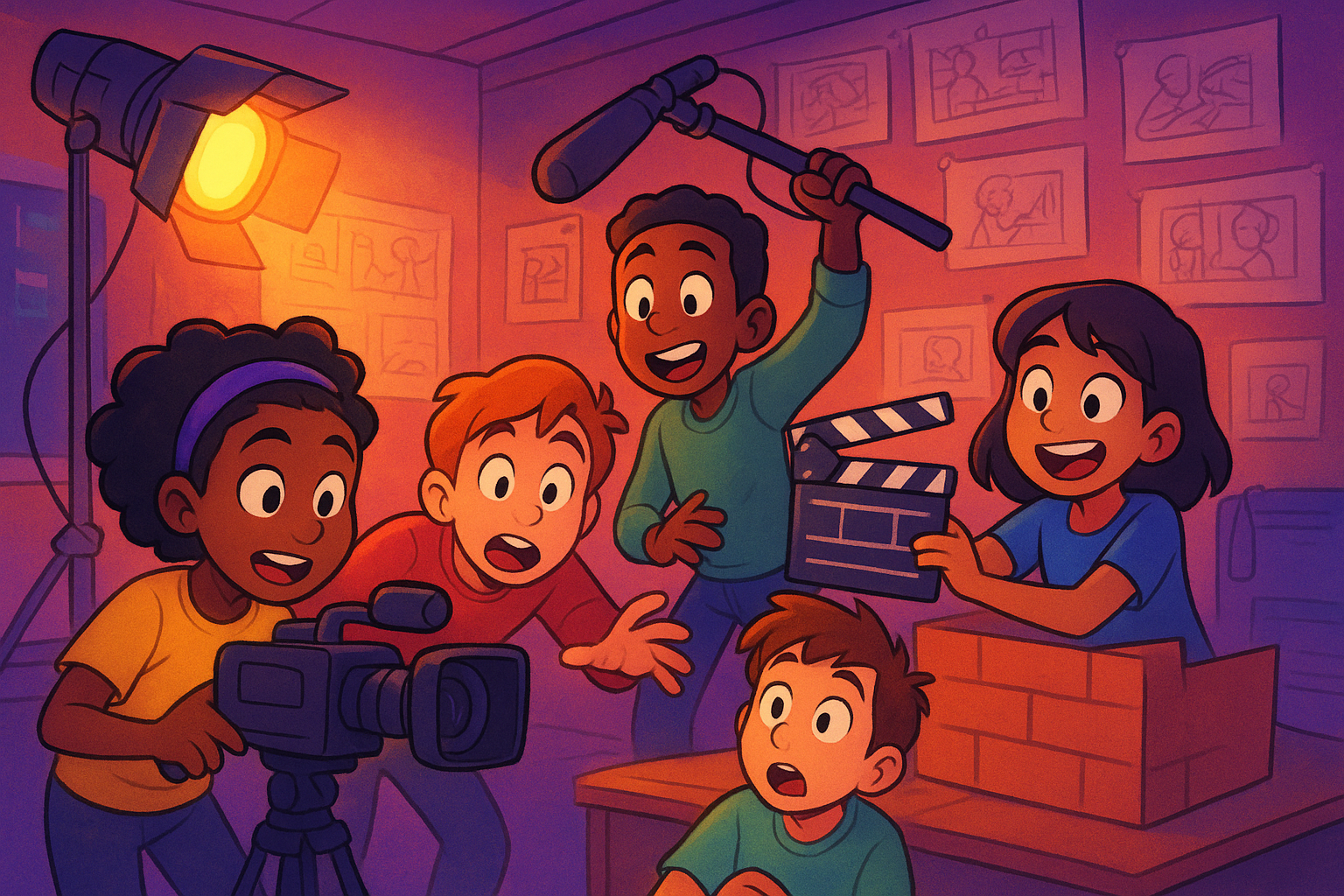
Either way, a short film is a wonderful project to promote teamwork. Students will learn how to delegate responsibilities and practice accountability to one another.
Idea 5: Build a Children’s Book for Younger Students
For language arts projects, older students can demonstrate their deeper understanding of a text by turning it into a children’s book. This could be their favorite chapter book, a historical account of a historical event, or a recent story that students find in the news.
This will force students to stretch their creativity as they attempt to simplify a complex story. As a bonus, their projects can be shared with a younger class for some fun cross-collaborative learning and engagement.
Idea 6: Solve a Local Community Challenge
Skim the news for some local issues in the community. With real-world situations, students can write proposals or create prototypes of a product to solve a problem. Show students the power they can have in community impact.
Idea 7: Design an Awareness Campaign
An awareness campaign is meant to foster support, encourage action, or stimulate enthusiasm for a given event or issue. Students can use this as an opportunity to foster collaboration as they learn about different cultures or even a new initiative in the community. As students plan and draft an awareness campaign, they’ll become greater critical thinkers and develop stronger audience awareness.
Idea 8: Plan a Schoolwide Event
Hosting a schoolwide event is an exciting opportunity for students to take on leadership roles and work towards a shared goal. Whether a cultural fair, talent show, or science exposition, this experience can help students practice teamwork and problem-solving. At the end, they’ll strengthen their presentation skills by sharing their event plans with their peers or school staff. Who knows, maybe this will be the first year your school hosts a spelling bee/dance off hybrid (because spelling and rhythm both matter, people!).
Idea 9: Create a Business Pitch
Encourage students to start thinking like entrepreneurs. With a business pitch project, they’ll brainstorm a product or service, conduct research on how to create or market it, and create a persuasive presentation. This project develops essential entrepreneurship, communication, and research skills, all helping students get ready to innovate in the real world.
Idea 10: Discover the Science of Everyday Life
Students often encounter science in their daily routines without even realizing it. With these kinds of research projects, they’ll use the scientific method to explore questions they may have about the world around them. How does soap clean? How does a bridge hold weight? What makes bread rise? Through their investigations, students will see how science influences their everyday life, while building practical skills for future research.
Idea 11: Construct a Historical Museum Exhibit
Turn your classroom into a museum! Students can design an exhibit that showcases an important art movement or even an important historical figure or event. This experience combines social studies with art and storytelling. Through an exhibit project, students can creatively represent the past while demonstrating an understanding of its significance.
Idea 12: Write and Stage a Play
Few projects can combine creativity and teamwork quite like staging a play. Students can adapt a favorite story or even write an original script to perform for the class. Through language arts, collaboration, and presenting, they will learn to express complex ideas, manage different roles, and bring characters to life. And who knows, maybe you have the next Shakespeare among your students.
Idea 13: Host a Student-Led Podcast
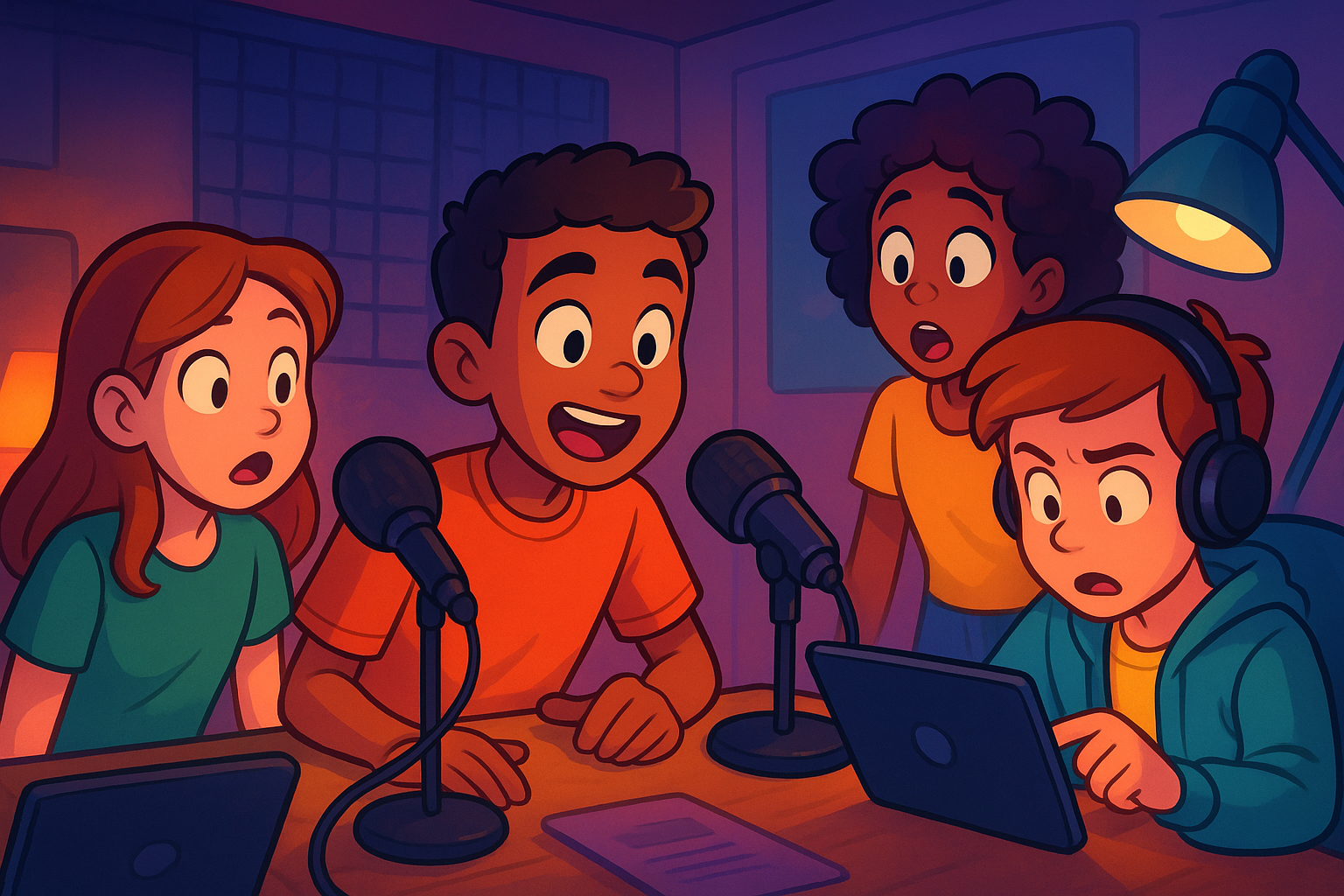
A podcast is the perfect opportunity for students to practice their communication skills in the subject areas they care about. Plus, they can practice some computer skills as they record and edit a podcast. Challenge students to research a topic, create a script, and record a 5-15-minute podcast. You can give students different objectives depending on what skills you want to focus on: persuasive, informative, or entertaining.
Idea 14: Engineering Challenge: Build a Better Bridge
Design your own simple bridge that holds a certain object or amount of weight. This could be out of simple materials like popsicle sticks or through an online simulator. Challenge your students to build a bridge that is stronger or can hold more weight. Hands-on projects such as these show students how to use math and science for problem-solving. You’ll be surprised at how creative students can be!
Idea 15: Community Map Creation
This project is a great way to help students get involved in the local community. Let students choose an area of interest in the community (a national park, the school, their neighborhood, etc.). Challenge them to perform deep subject area exploration and learn fun facts about the area they chose. Next, they can pull out their art skills to create a map or diorama of their location.
Why Project-Based Learning Is a Game-Changer
PBL is the pathway to increased engagement and motivation for students. When students have to solve a real-world problem, they’ll experience deeper learning because of a higher sense of responsibility.
Thinking back to the 4 C’s, those don’t just mark an effective project, but they also show what your students will gain: more critical thinking while solving a complex problem, enhanced communication, stronger collaboration, and more expansive creativity. On top of that, PBL can always incorporate research, which is an essential skill in today’s technological world.
Regardless of age, grade, topic, or learning style, project-based learning can support your students in whatever way they want to grow next.
Designing Effective PBL Units (Without Losing Your Mind)
Remember: PBL is not just a free-for-all. While students should take the lead, there needs to be some structure to help you avoid full-blown chaos. Start off by setting clear learning objectives and outcomes. What question are students trying to answer? What problem are they solving? What skills should they gain throughout this project?
Where possible, leverage student-centered design. Let students co-design where possible, whether that’s the timeline for the project or even what the final submission should look like. When students have more say, they’ll be more engaged. Incorporating student voice and choice is key to successful project-based learning.
Use small groups to foster collaboration. Small groups can help students feel more comfortable speaking up and practicing collaboration. If you’re looking for a shortcut to teaming up students, try out one of Mission.io’s ready-to-launch Missions as a shortcut to effective PBL units.
Implementing Project-Based Learning in Any Classroom
Whether it’s your first year teaching kindergarten or you’re a seasoned middle school science teacher, project-based learning has its place in your classroom. It starts with shifting your perspective. PBL should be student-centered, not teacher-centered. To achieve that, seek to facilitate rather than simply lecture. Pose the questions, push students to dig deeper, correct as needed, but let them do the talking. Encourage students to promote their ideas through public speaking, presenting, and sharing projects.
To take these student projects to the next level, incorporate technology. (Hint: check out some of our favorite technology-forward collaboration tools here). Mission.io helps you avoid the hassle of student log-ins and forgotten passwords. All you need to do is launch a mission, students join, and then in the snap of a finger, you have real-world challenges in your existing curriculum.
Assessing Success: Measuring Learning in PBL
Seeing success in a student should be more than test scores and report cards. Through project-based learning, you can build in opportunities for success measurement along the way, for yourself and the students. Focus on how they gain and apply knowledge. Look for essential soft skills like initiative, collaboration, critical thinking, and resilience. Instead of only congratulating students for the right answer, congratulate them on being a good friend, cooperating with their team, or having a creative idea. There’s more to life than a grade!
Online tools like Mission.io’s data-tracking features have built-in assessments of these soft skills. That way, you can not only see what your students are doing well but also how they’re growing in those skills. After a Mission, big project, or challenging team activity, encourage students to reflect and perform a self-assessment. What did they do well? What did they struggle with? What will they do differently next time?
Real-World Readiness: Why PBL Prepares Students for Life
Project-based learning has long-term and real-world benefits for students. Reuters reports that we are shifting towards a “project economy,” where organizations and individuals will focus more on professional projects over static roles. In order for students to be career-ready, they need the problem-solving and time management skills that PBL offers.
Entrepreneurship is all about seeing a problem or a need and coming up with a creative solution. Project-based learning is the exact same. Help students be prepared to have stand-out skills by presenting them with real-world problems to address. If you’re stuck, check out our Mission Library for some simulations of real-world issues.
Overcoming Common PBL Challenges
As much as we love project-based learning, momma didn’t raise no fool. It won’t come about in the classroom without some challenges. Many teachers face resistance to change, whether from their colleagues, administrators, or even students who prefer more traditional instruction. True, it may feel risky to step away from lectures and worksheets when those have worked in the past, especially when faced with something that’s louder, messier, and more student-driven. But “working” and “being effective” aren’t always synonymous. Others may struggle with a lack of resources or planning time, worried that project-based learning will become absolute chaos.
The key is to start small. Don’t turn the classroom into an accurate recreation of the Mayflower overnight. Try introducing one short, structured project before redesigning an entire unit. For PBL, scaffolding is your best friend: checklists, reflection prompts, and peer editing will help students stay on track and gradually become more independent. Most importantly, remember that you don’t have to start from scratch. Tools like Mission.io make project-based learning more manageable through ready-to-go Missions, challenges, and progress tracking available to you.
With the right mindset and the right tools, even the biggest PBL challenges become opportunities for creativity and growth, for teachers and for students.
Why Mission.io = Project-Based Learning Supercharged
Mission.io is the fastest way to launch radically engaging, student-centered missions in your classrooms. Turn project ideas into real-world challenges through Missions embedded with critical thinking, collaboration, and deeper learning. Any lesson can become an adventure, and any student can become a champion.
Try Mission.io for free–no hassle, no mind-numbing prep. Just full-class immersion at the push of a button.